

Human-centric Lighting

Human-centric Lighting
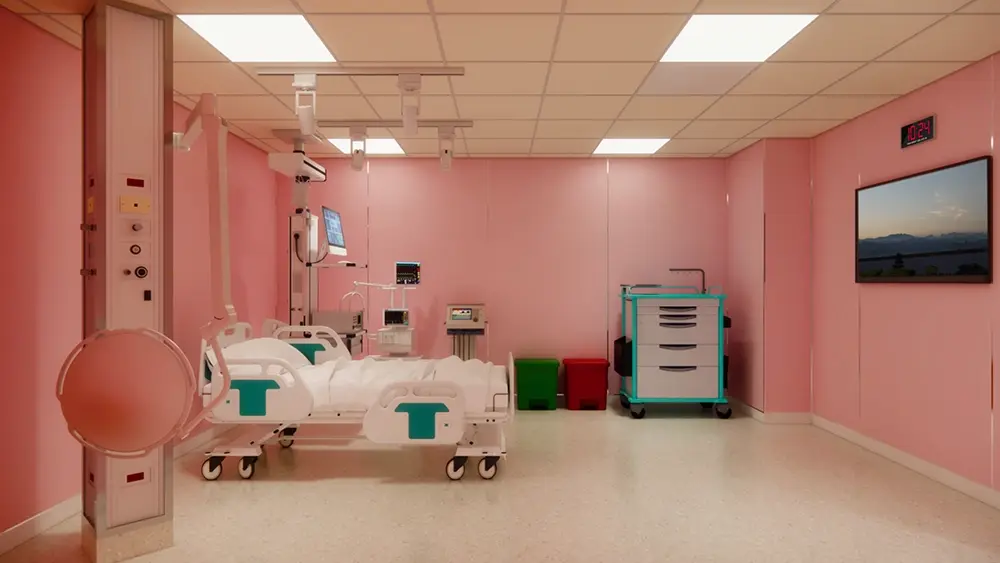
Traditional (including LED) lighting often overlooks the human body’s actual needs for light, which over time can lead to circadian rhythm disruption and visual fatigue. Healthy circadian lighting is designed to break this limitation by applying scientifically engineered spectra and intelligent control systems to recreate the dynamic changes of natural daylight. We are committed to creating high-quality lighting environments that support work, study, and rest—allowing every beam of light to positively influence your physiological state and daily rhythm.
How Does Sunlight Affect Our Daily Rhythm?
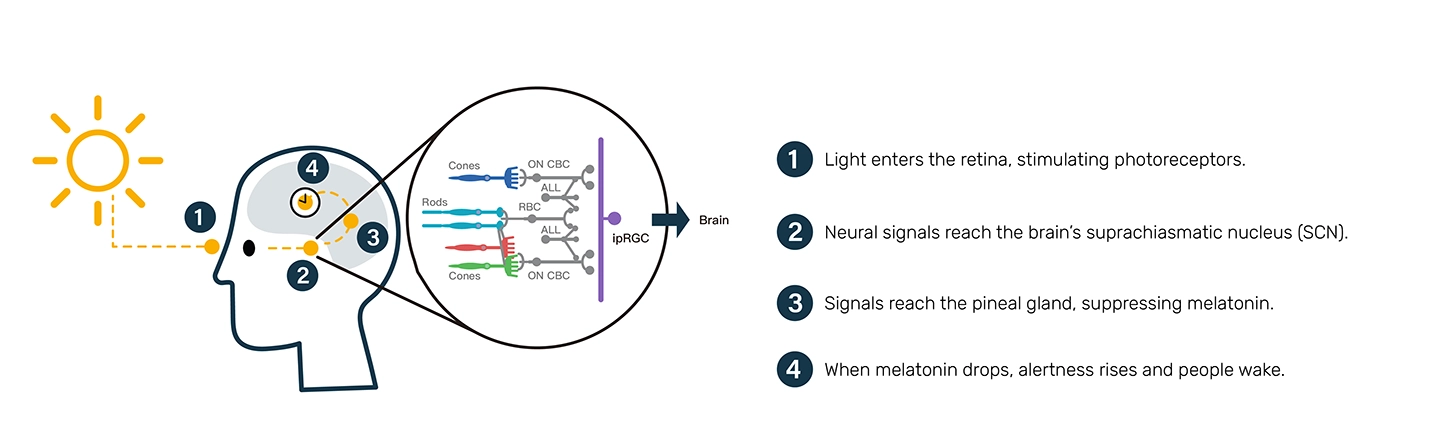
In circadian pathways, retinal photoreceptor cells (ipRGCs) are sensitive to blue light (440–480 nm). This signal goes to the SCN in the hypothalamus, suppressing pineal melatonin. Low melatonin increases alertness, while high levels cause drowsiness.
Among the retina's light-sensitive cells, ipRGCs (intrinsically photosensitive retinal ganglion cells) play the key role in transmitting light signals to the brain's SCN (suprachiasmatic nucleus), the body's master clock, thereby regulating our circadian rhythm. Other photoreceptor cells are crucial for vision but have minimal direct impact on our internal clock.
Sunlight changes in Intensity and Color Over Time
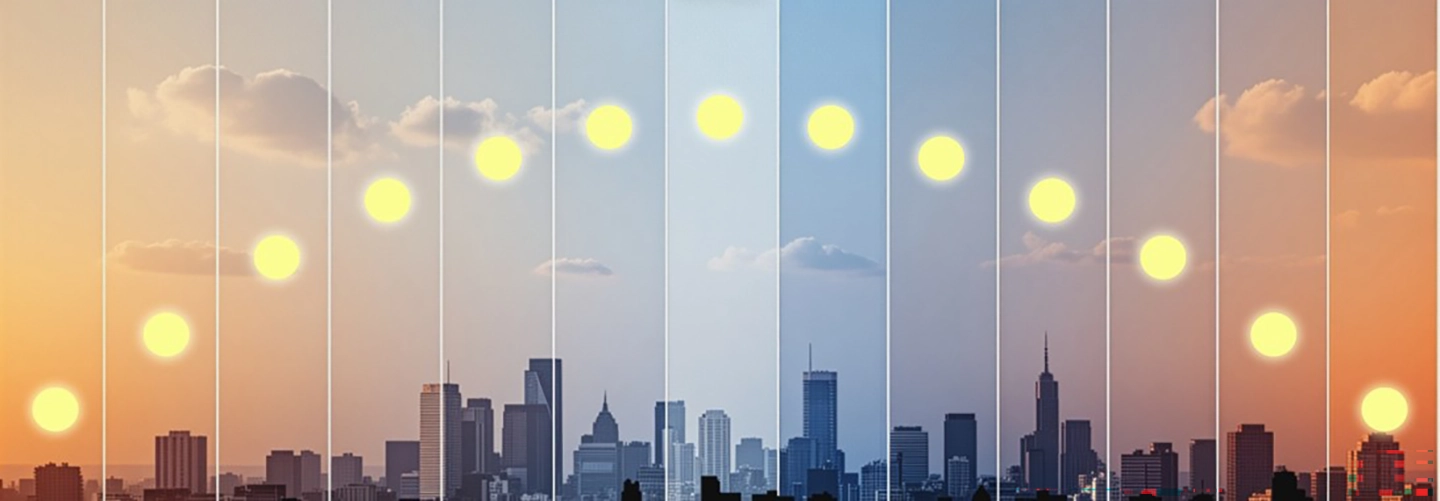
Sunrise & sunset→ Warm and softer light Noon → Strongest light with cooler tones
These natural changes allow our bodies to align wake-rest cycles with sunrise and sunset. Yet modern people spend long hours indoors with limited daylight exposure, making it crucial that artificial lighting mimics natural light variations to maintain healthy routines and quality of life.
Standard White LED vs EDISON Healthy Lighting LED
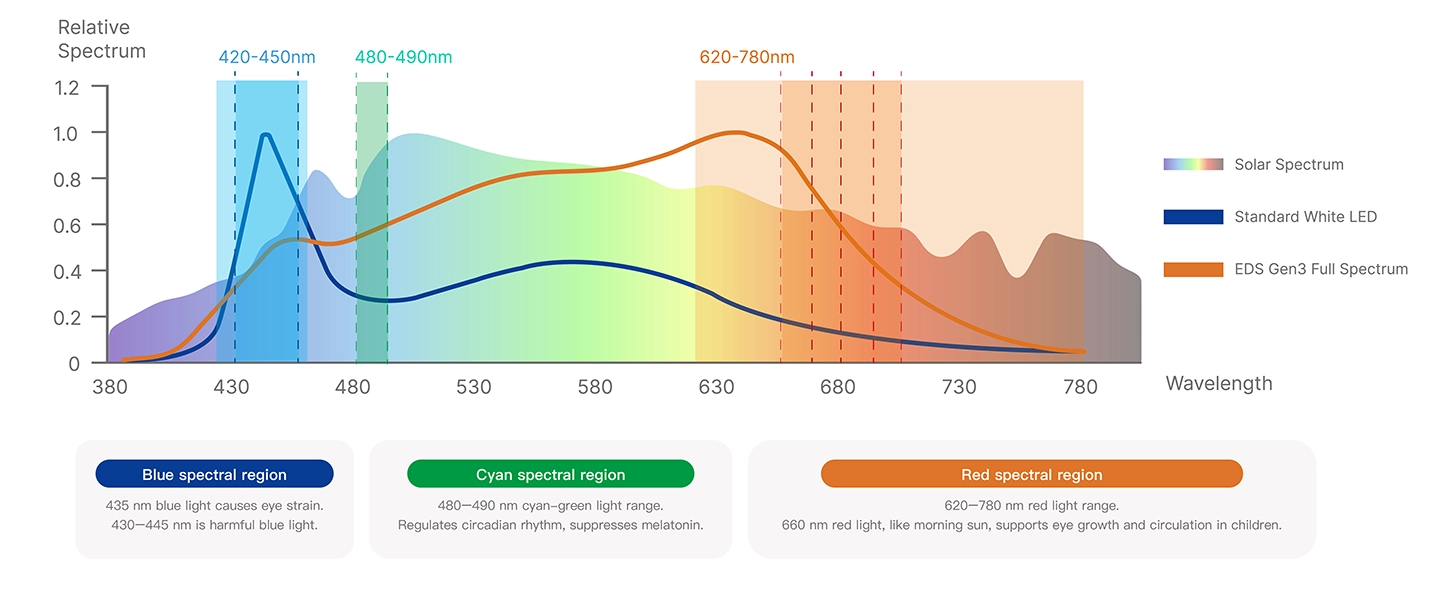
Patented Healthy Lighting Spectrum
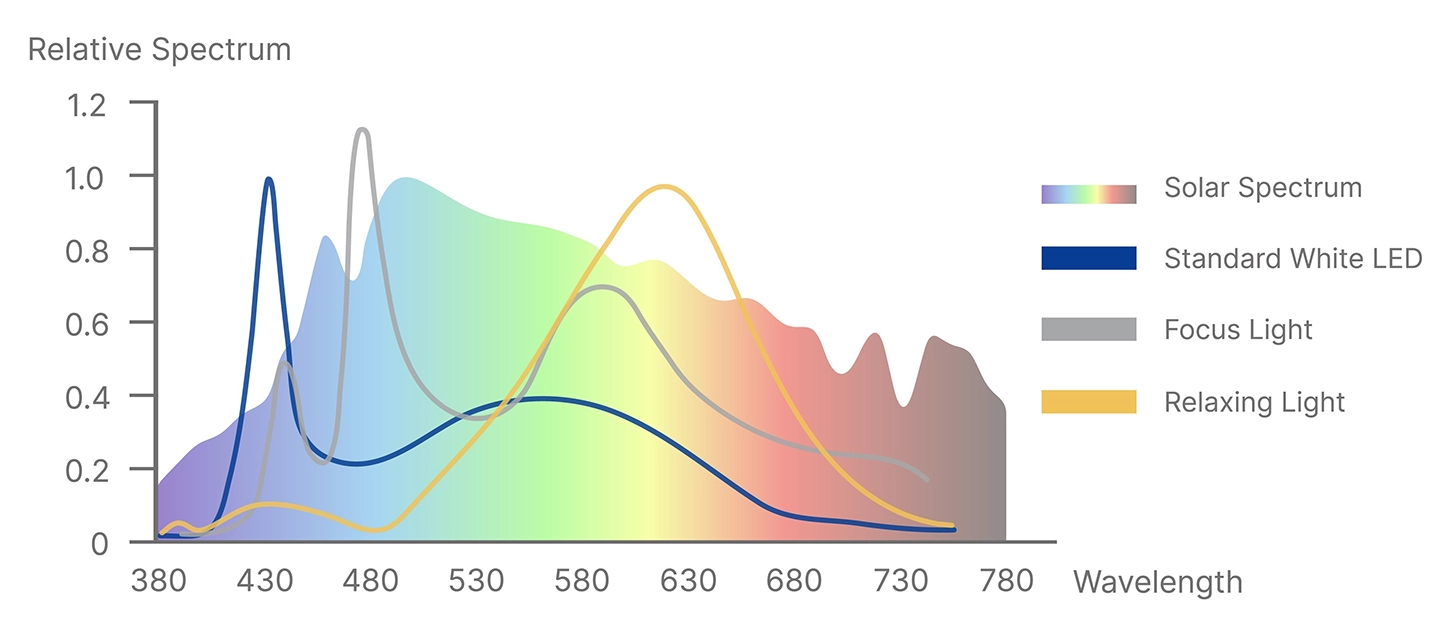
Focus Light
Enhanced blue light output effectively suppresses melatonin secretion, helping users stay alert and focused — ideal for studying, working, and driving where concentration is required.
Relaxing Light
By reducing blue light and enhancing red and warm spectra, a relaxing atmosphere is created — easing eye strain, promoting melatonin secretion, and helping the body and mind transition into rest.
By switching between focus light and relaxing light, lighting can truly meet human-centric needs — not only providing illumination, but also supporting users’ health and quality of life.
Core technologies of Healthy Lighting


Full-Spectrum
Achieves seamless adjustment from low to high brightness and from warm to cool tones through precise spectral and luminance control, allowing light to adapt naturally to time and usage scenarios.


Sun-like Spectrum
Aims for a spectral distribution that closely mimics natural daylight, balancing visual performance with circadian rhythm needs to align artificial lighting with the positive biological effects of natural light.


Anti-Glare
Utilizes advanced optical structures and light distribution designs to effectively suppress glare and high-intensity hot spots, reducing eye strain and creating a more user-friendly lighting environment for long-term exposure.


High CRI
Focuses on the light source's ability to render the true colors of objects, reducing chromatic aberration and distortion while enhancing visual comfort and spatial realism, thereby minimizing visual fatigue during prolonged use.
References
- Brainard, G. C., Hanifin, J. P., Greeson, J. M., Byrne, B., Glickman, G., Gerner, E., & Rollag, M. D. (2001). Action spectrum for melatonin regulation in humans: Evidence for a novel circadian photoreceptor. Journal of Neuroscience, 21(16), 6405–6412. https://doi.org/10.1523/JNEUROSCI.21-16-06405.2001
- Cajochen, C., Munch, M., Kobialka, S., Krauchi, K., Steiner, R., Oelhafen, P., Orgül, S., & Wirz-Justice, A. (2005). High sensitivity of human melatonin, alertness, thermoregulation, and heart rate to short wavelength light. Journal of Clinical Endocrinology & Metabolism, 90(3), 1311–1316. https://doi.org/10.1210/jc.2004-0957
- Cajochen, C., Frey, S., Anders, D., Späti, J., Bues, M., Pross, A., Mager, R., Wirz-Justice, A., & Stefani, O. (2011). Evening exposure to a light-emitting diodes (LED)-backlit computer screen affects circadian physiology and cognitive performance. Journal of Applied Physiology, 110(5), 1432–1438. https://doi.org/10.1152/japplphysiol.00165.2011
- Do, M. T. H., & Yau, K. W. (2010). Intrinsically photosensitive retinal ganglion cells. Physiological Reviews, 90(4), 1547–1581. https://doi.org/10.1152/physrev.00013.2010
- Klein, D. C., Moore, R. Y., & Reppert, S. M. (1991). Melatonin: A pineal hormone with circadian rhythm regulatory functions. Endocrine Reviews, 12(2), 151–180. https://doi.org/10.1210/edrv-12-2-151
- Thapan, K., Arendt, J., & Skene, D. J. (2001). An action spectrum for melatonin suppression: Evidence for a novel non-rod, non-cone photoreceptor system in humans. Journal of Physiology, 535(1), 261–267. https://doi.org/10.1111/j.1469-7793.2001.t01-1-00261.x
- Michael Tri Hoang Do and King-Wai Yau. Intrinsically Photosensitive Retinal Ganglion Cells. Physiological Reviews, 90(4), 1547–1581.https://doi.org/10.1152/physrev.00013.2010