A Beginner's Complete Guide to Using Plant Grow Lights

A Beginner's Complete Guide to Using Plant Grow Lights
Whether you're growing herbs on a kitchen shelf or setting up a dedicated indoor garden, understanding how to use a plant grow light correctly is the first step toward consistent, healthy plant growth. Natural light through windows is often insufficient — too low in intensity, too inconsistent in duration, and too limited in spectrum. This guide walks you through everything beginners need to know: what plant grow lights are, how to choose them, where to place them, and how to create a lighting schedule that actually works.
What Is a Grow Light?
A plant grow light is an artificial light source specifically engineered to support plant photosynthesis and biological development. Unlike standard household bulbs that are designed for human visual comfort, plant grow lights are calibrated to emit wavelengths within the Photosynthetically Active Radiation (PAR) range — 400 to 700 nanometers — which plants can directly absorb and convert into energy.
Modern plant grow lights come in several types: fluorescent, HID (High-Intensity Discharge), and LED. Of these, LED plant grow lights have become the dominant technology in both hobbyist and commercial settings due to their energy efficiency, spectral flexibility, and long operational lifespan.
How Does a Grow Light Work?
Plants photosynthesize by absorbing light through chlorophyll pigments in their leaves. Chlorophyll A and B have peak absorption in the blue (around 430–450 nm) and red (around 640–680 nm) regions of the light spectrum. A well-designed plant grow light delivers photons within these ranges at sufficient intensity to drive biochemical reactions.
The key measurement here is PPFD (Photosynthetic Photon Flux Density), expressed in µmol/m²/s, which quantifies the number of photons reaching a plant's canopy per second per square meter. For a plant grow light to be effective, it must deliver adequate PPFD across the entire grow area — not just at the center.
Read more about plant grow lights at: What Is a Grow Light? The Science Behind LED Spectrum, PAR, and PPFD
Why Do You Need a Grow Light?
Many indoor gardeners underestimate how much light plants actually need — and how poorly a typical home environment delivers it.
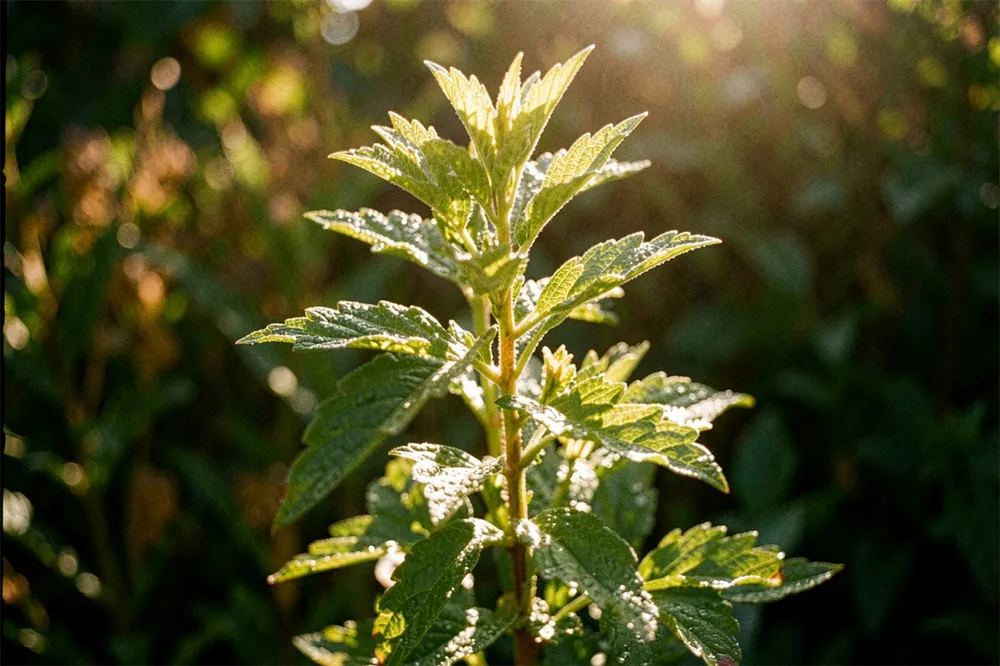
Low Natural Light at Home — Windows Aren't Enough
A south-facing window on a sunny day might deliver 1,000–2,000 lux of light intensity. However, most culinary herbs require 3,000–5,000 lux for sustained healthy growth, and fruiting plants like tomatoes or peppers need upward of 8,000–10,000 lux. Additionally, natural light:
• Varies by season, weather, and time of day
• Only reaches plants positioned directly at the window
• Doesn't provide consistent photoperiod control
In reality, most interior rooms receive far less than what plants require, especially in winter months or in apartments with limited window access.
Create the Perfect "Sunlight" Anywhere
A properly selected and positioned plant grow light gives you complete control over:
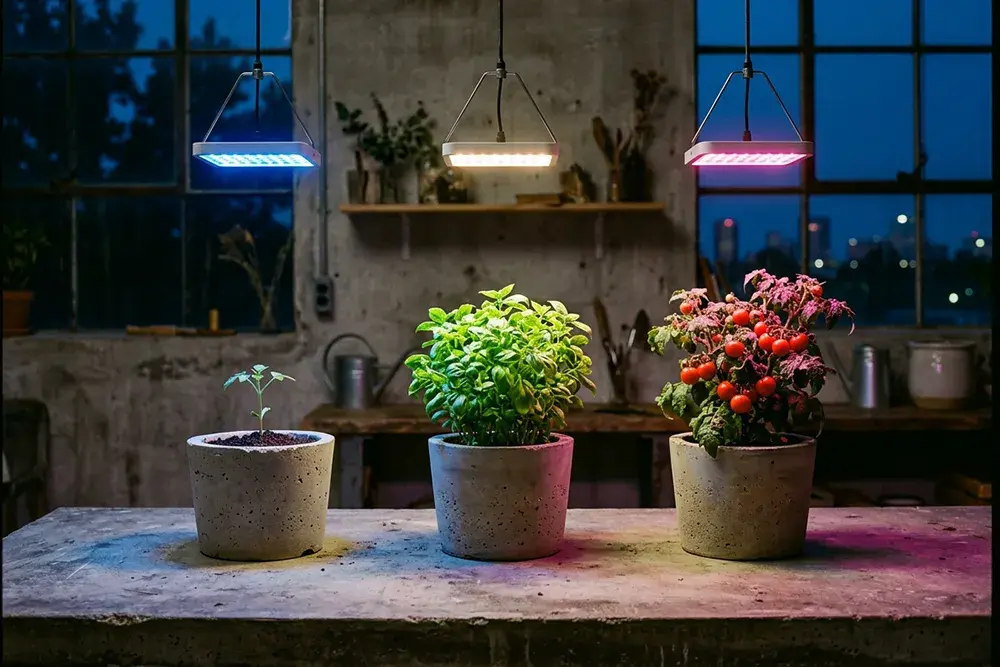
• Spectrum — the wavelengths your plants receive at each growth stage
• Intensity — the PPFD level reaching the plant canopy
• Photoperiod — the number of hours of light exposure per day
This level of control allows you to grow plants year-round, independent of geography or season. It also enables optimization: delivering more blue light during vegetative stages and shifting to red-dominant spectrum during flowering to maximize yield.
How to Choose the Right Grow Light
Selecting the right plant grow light is not about picking the highest wattage — it's about matching the light's technical specifications to your grow space, plant type, and growth stage.
Key Specs: Wattage, PPFD, Spectrum
| Specification | What It Means | Why It Matters |
|---|---|---|
| Wattage | Power consumption in watts | Indicates energy use, not output quality |
| PPFD | Photons delivered per m²/s (µmol/m²/s) | Direct measure of usable light for plants |
| PPE (µmol/J) | Photon efficiency per joule consumed | Measures how efficiently electricity converts to plant-usable light |
| Spectrum | Wavelength range of emitted light | Determines which plant processes are supported |
| Coverage Area | Footprint at a given hanging height | Determines how much growing space is served |
For hobby growers: look for PPFD maps published by the manufacturer showing light distribution across the coverage area. A fixture that delivers 800 µmol/m²/s at the center but only 200 µmol/m²/s at the edges will cause uneven growth.
For commercial operators or serious growers: prioritize PPE (µmol/J) — this metric reflects true system efficiency and directly impacts your electricity operating cost over thousands of hours.
Read more about how to choose a good plant grow light at: How to Choose LED Grow Lights: Comparing Types, Specs, and Commercial Applications
Where to Place Your Grow Light
Placement is one of the most commonly misunderstood aspects of plant grow light use. Even a high-quality fixture can underperform — or damage plants — if positioned incorrectly.
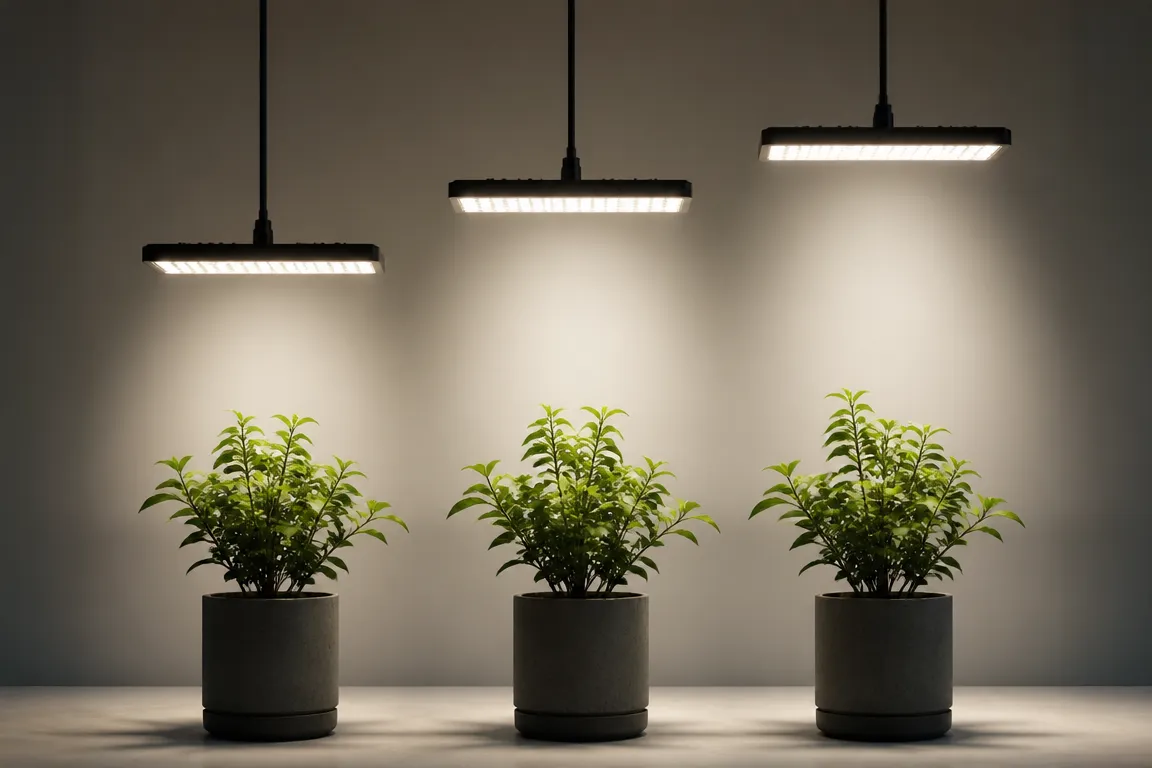
How Far Should a Grow Light Be from Plants?
Optimal hanging distance depends on the fixture's power and design. General guidelines:
• Low-intensity LED panels (≤100W): 12–24 inches above canopy
• Mid-range LED fixtures (100–300W): 18–30 inches above canopy
• High-output commercial LEDs (300W+): 24–48 inches above canopy
Always refer to the manufacturer's PPFD charts for your specific fixture. Light intensity follows the Inverse Square Law — doubling the distance reduces intensity to one-quarter. This means small adjustments in height create significant changes in PPFD delivery.
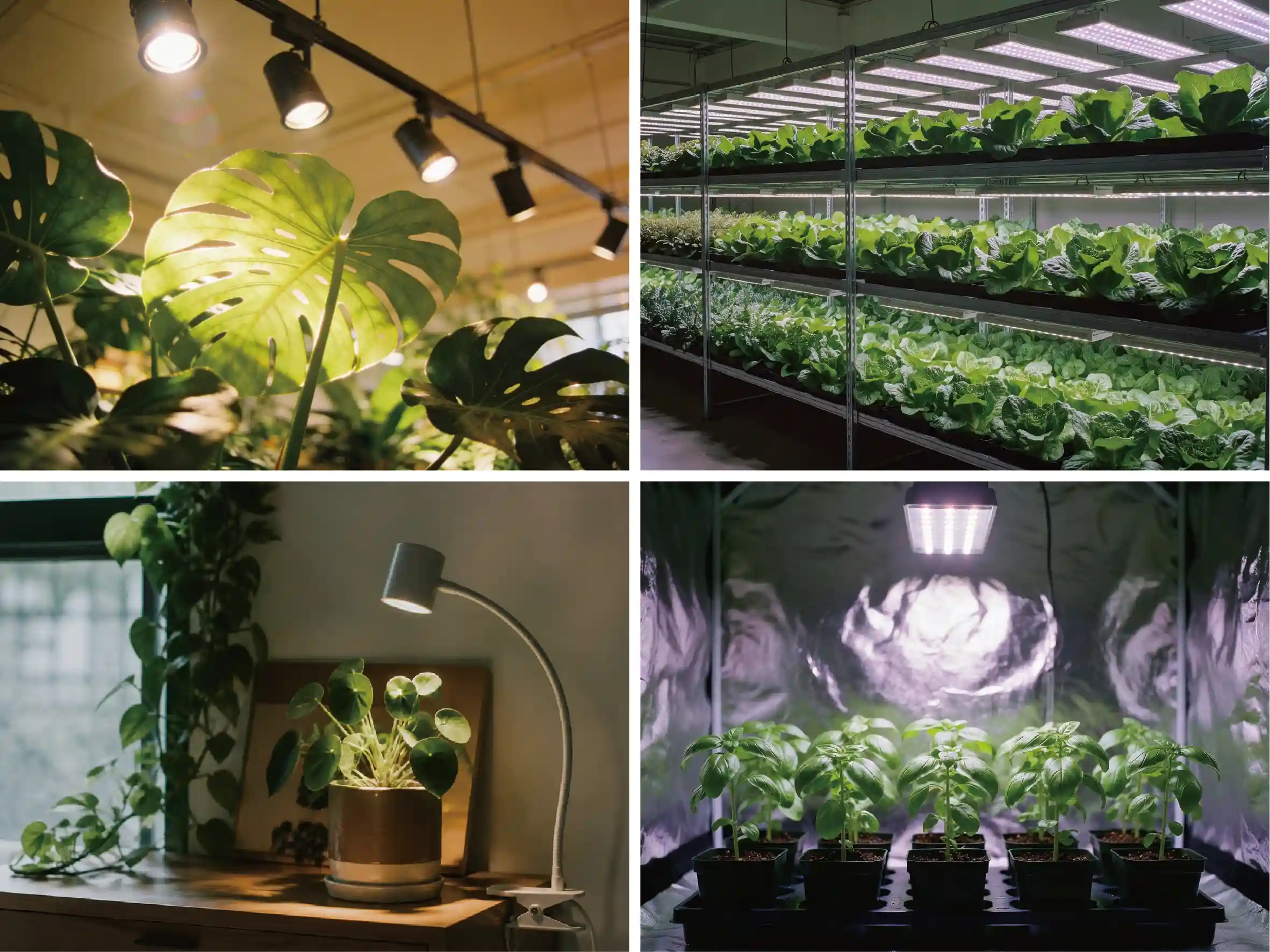
Mounting Options: Overhead, Shelf, Clamp, Tent
| Mounting Type | Best For | Notes |
|---|---|---|
| Overhead rail/cable | Dedicated grow rooms, commercial | Full coverage, adjustable height |
| Shelf-mounted | Herb gardens, seedling trays | Easy access, limited adjustability |
| Clamp-on | Small containers, single plants | Flexible positioning, low cost |
| Grow tent with built-in mount | Controlled environment, beginners | Reflective interior improves efficiency |
How to Avoid Uneven Plant Growth?
Uneven growth — where plants near the center grow faster than those at the edges — is a common result of poor light distribution. Solutions include:
• Rotating plant trays every 2–3 days
• Using multiple fixtures to overlap coverage zones
• Selecting fixtures with high uniformity ratings (a PPFD uniformity of ≥80% across the coverage area is recommended)
• Raising the fixture height to widen the beam spread, at the cost of some intensity
When and How Long Should You Run Your Plant Grow Lights?
Photoperiod — the daily duration of light exposure — is a critical variable that directly influences plant growth stage, flowering, and yield.
Light Schedule by Plant Type
| Plant Type | Light Duration | Notes |
|---|---|---|
| Seedlings | 16–18 hours/day | High-energy demand, blue-dominant spectrum |
| Leafy greens (lettuce, spinach) | 14–16 hours/day | Day-neutral, tolerant of variation |
| Herbs (basil, mint) | 14–16 hours/day | Consistent schedule important |
| Vegetative stage (general) | 18 hours on / 6 hours off | Promotes canopy development |
| Flowering plants (photoperiod) | 12 hours on / 12 hours off | Triggers reproductive phase |
| Autoflowering cannabis | 18–20 hours/day | Not photoperiod-sensitive |
| Fruiting crops (tomatoes, peppers) | 14–16 hours/day | High PPFD requirement |
Should You Run LED Grow Lights 24 Hours?
Running plant grow lights continuously (24/0 schedule) is generally not recommended for most plant species. Plants have a dark period requirement for several biological reasons:
• Respiration — plants consume oxygen and metabolize sugars during dark periods
• Stress response — continuous light can cause leaf curling, bleaching, and reduced photosynthetic efficiency in many species
• Circadian rhythm — plants have biological clocks that regulate enzyme production, stomata behavior, and growth hormone cycles
Exceptions include certain lettuce varieties and some microgreens, which tolerate 24-hour lighting without significant stress. For most crops, an 18/6 or 20/4 schedule is the maximum advisable for vegetative growth.
How to Set Up Your LED Grow Light
What Accessories Do You Need for Your LED Grow Light?
Before you power on your plant grow light, gather the following accessories:
• Adjustable rope hangers or ratchet hangers — allow precise height adjustment without tools
• Digital timer — automates your photoperiod schedule; look for 24-hour programmable models
• PPFD meter (quantum sensor) — measures actual light intensity at canopy level
• Thermometer/hygrometer — monitors temperature and humidity, which are affected by light heat output
• Reflective material or grow tent — increases light efficiency by redirecting photons back toward plants
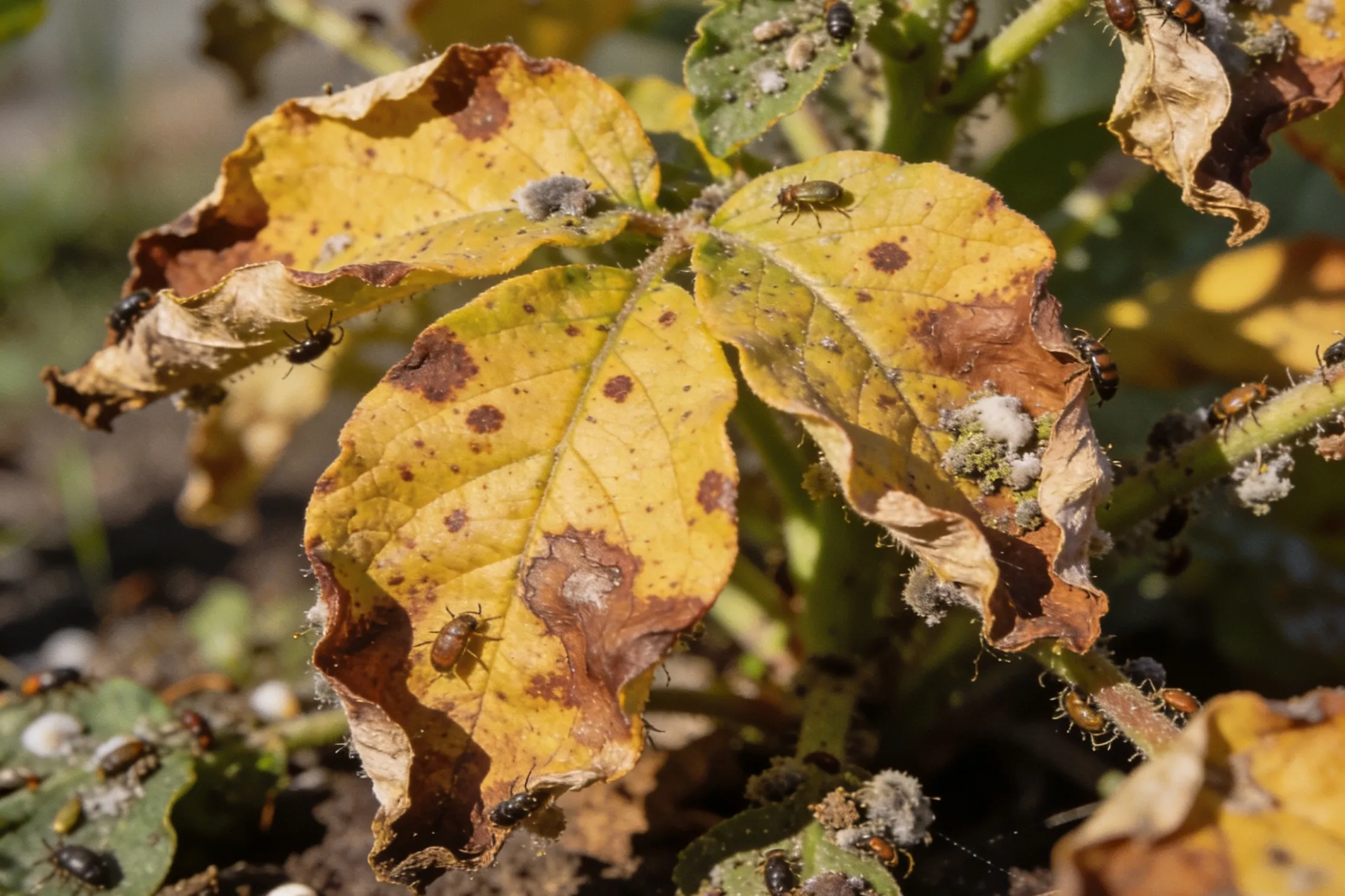
Signs Your Plants Are Getting Too Much or Too Little Light
| Symptom | Likely Cause | Action |
|---|---|---|
| Leaf bleaching or whitening | Excessive intensity (light burn) | Raise fixture height |
| Upward leaf curling | Heat stress or excess intensity | Check temperature; raise fixture |
| Elongated, leggy stems | Insufficient light (etiolation) | Lower fixture or increase wattage |
| Pale green or yellow leaves | Low light or spectrum mismatch | Increase PPFD; check spectrum |
| Slow or no growth | Intensity too low for plant needs | Recalculate PPFD requirements |
| Brown leaf edges | Heat stress combined with low humidity | Improve airflow; adjust VPD |
FAQ
No. Standard LED bulbs are optimized for human vision and emit primarily in the 5000–6500K white range, which does not provide sufficient intensity or spectral balance in the PAR range for plant photosynthesis. They lack the red (600–700 nm) and blue (400–500 nm) wavelength intensity that plants need. A purpose-built LED plant grow light delivers 10–50x more usable photons per watt than a standard household LED.
A commonly referenced guideline is 30–50 watts per square foot for flowering and fruiting crops (tomatoes, peppers, cannabis). For leafy greens and herbs, 20–30 watts per square foot is typically sufficient. However, wattage alone is an imprecise metric — PPFD is a more reliable indicator. Aim for 400–600 µmol/m²/s for vegetative growth and 800–1,200 µmol/m²/s for flowering.
Frequent changes to the light schedule can stress plants and disrupt their circadian rhythms. For photoperiod-sensitive plants (those that flower in response to day length), sudden changes — especially shifting from 18 hours to 12 hours — may unintentionally trigger premature flowering or re-vegetative stress. Establish a consistent schedule and maintain it throughout each growth stage.
Quality LED plant grow lights are rated for 50,000–100,000 hours of operation. At 18 hours/day of use, that translates to 7–15 years before the light output degrades to 70% of its original intensity (L70 rating). However, individual LEDs rarely fail suddenly — output gradually diminishes over time. Annual PPFD measurements can help you track performance degradation and plan replacement accordingly.